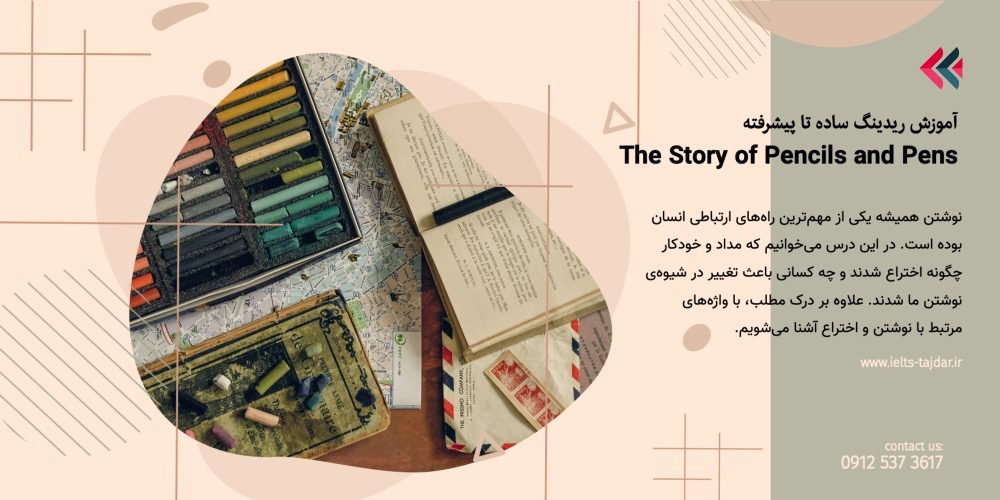
در این درس با داستان جالب تکامل ابزارهای نوشتن آشنا میشویم؛ از مدادهای ابتدایی با چوب و سرب گرفته تا خودکارهای مدرن امروزی. میفهمیم که چطور نوشتن در طول تاریخ آسانتر، سریعتر و تمیزتر شده است. این متن یکی از بخشهای جذاب دورهی Reading از پایه تا پیشرفته است و به ما کمک میکند همزمان هم درک مطلب را تمرین کنیم، هم دایرهی لغاتمان را گسترش دهیم.
نوشتن همیشه یکی از مهمترین راههای ارتباطی انسان بوده است. در این درس میخوانیم که مداد و خودکار چگونه اختراع شدند و چه کسانی باعث تغییر در شیوهی نوشتن ما شدند. علاوه بر درک مطلب، با واژههای مرتبط با نوشتن و اختراع آشنا میشویم.
No one knows who invented pencils or when it happened. A Swiss described a pencil in a book in 1565. He said it was a piece of wood with lead inside it. (Lead is a very heavy, soft, dark gray metal.) Pencils weren’t popular, and people continued to write with pens. They used bird feathers as pens.
Then, in 1795, someone started making pencils from graphite, and they became very popular. Graphite is like coal. (Coal is black, and we burn it for heat and energy.) Today, people make pencils in the same way. They grind the graphite, make it into the shape of a stick, and bake it. Then they put it inside a piece of wood. One pencil can write 50,000 English words or make a line 55 kilometers long.
People wrote with feather pens and then used pens with metal points. They had to dip the point into ink after every few letters. Next, someone invented a fountain pen that could hold ink inside it. A fountain pen can write several pages before you have to fill it again.
Two Hungarian brothers, Ladislao and Georg Biro, invented the ballpoint pen. They left Hungary and started making ballpoint pens in England in 1943, during World War II. English pilots liked the pens. They couldn’t write with fountain pens in airplanes because the ink leaked out. Later, a French company called Bic bought the Biros’ company. Some people call ballpoint pens “Bics.” Australians call them “biros.” Whatever we call them, we use them every day.
|
New word |
Part of Speech |
Synonyms |
|---|---|---|
|
invent |
verb |
create, develop |
|
graphite |
noun |
carbon, mineral |
|
fountain pen |
noun |
ink pen |
|
ballpoint pen |
noun |
biro, pen |
|
grind |
verb |
crush, mill |
|
leak |
verb |
spill, escape |
|
feather |
noun |
plume |
|
metal |
noun |
alloy, element |
|
popular |
adjective |
common, well-known |
|
company |
noun |
firm, business |
invent (v): اختراع کردن. مثلاً: Edison invented the light bulb.
graphite (n): مادهای سیاه و نرم که در مدادها استفاده میشود.
fountain pen (n): خودکاری که درونش جوهر دارد و قابل پر شدن است.
ballpoint pen (n): خودکار ساچمهای، همان نوعی که امروزه رایج است.
grind (v): خرد یا آسیاب کردن چیزی تا پودر شود.
leak (v): نشت کردن مایع یا گاز.
feather (n): پر پرنده، که در گذشته برای نوشتن استفاده میشد.
metal (n): فلز، مادهای سخت و براق مثل آهن یا سرب.
popular (adj): محبوب، پرطرفدار.
company (n): شرکت یا مؤسسه تجاری.
در متن از گذشته ساده (Past Simple) برای بیان رویدادهای تاریخی استفاده شده است.
برای مثال:
They used bird feathers as pens. → آنها از پر پرنده به عنوان قلم استفاده میکردند.
Someone invented a fountain pen. → کسی خودنویس را اختراع کرد.
در این درس تمرکز بر Skimming است — یعنی خواندن سریع متن برای فهمیدن ایدهی اصلی.
ایدهی اصلی این متن چیست؟
👉 «تکامل ابزار نوشتن از مداد تا خودکار در طول تاریخ»
در کشورهای انگلیسیزبان، هنوز هم اصطلاح “Biro” برای خودکار استفاده میشود، چون نام مخترع آن، Ladislao Biro بوده است. درحالیکه در بسیاری از کشورها مثل فرانسه، مردم به خودکار میگویند “Bic” که نام شرکت خریدار اختراع است.
ترجمه و تحلیل پاراگراف به پاراگراف متن
✏️ The Story of Pencils and Pens
No one knows who invented pencils or when it happened. A Swiss described a pencil in a book in 1565. He said it was a piece of wood with lead inside it. (Lead is a very heavy, soft, dark gray metal.) Pencils weren’t popular, and people continued to write with pens. They used bird feathers as pens.
هیچکس نمیداند چه کسی مداد را اختراع کرد یا چه زمانی این اتفاق افتاد. یک فرد سوئیسی در سال ۱۵۶۵ در کتابی مداد را توصیف کرد. او گفت مداد تکهای چوب است که داخلش سرب قرار دارد. (سرب فلزی سنگین، نرم و خاکستری تیره است.) مدادها محبوب نبودند و مردم همچنان با خودکار یا قلم مینوشتند. آنها از پر پرندگان به عنوان قلم استفاده میکردند.
|
New word |
Part of Speech |
Synonyms |
|---|---|---|
|
invent |
verb |
create, design |
|
describe |
verb |
explain, depict |
|
piece |
noun |
part, bit |
|
lead |
noun |
metal, element |
|
popular |
adjective |
liked, well-known |
|
continue |
verb |
keep doing, carry on |
|
feather |
noun |
plume, quill |
🔷 توضیح لغات:
invent: اختراع کردن چیزی برای اولین بار
lead: فلز سنگین و نرم به رنگ خاکستری تیره
feather: پر پرندگان، که در گذشته برای نوشتن استفاده میشد (quill pen)
Then, in 1795, someone started making pencils from graphite, and they became very popular. Graphite is like coal. (Coal is black, and we burn it for heat and energy.) Today, people make pencils in the same way. They grind the graphite, make it into the shape of a stick, and bake it. Then they put it inside a piece of wood. One pencil can write 50,000 English words or make a line 55 kilometers long.
سپس در سال ۱۷۹۵، کسی شروع به ساخت مداد از گرافیت کرد و مدادها بسیار محبوب شدند. گرافیت شبیه زغال است. (زغال سیاه است و برای گرما و انرژی آن را میسوزانیم.) امروزه هم مدادها تقریباً به همین روش ساخته میشوند. گرافیت را آسیاب میکنند، به شکل میله درمیآورند و میپزند. سپس آن را داخل تکهای چوب قرار میدهند. یک مداد میتواند ۵۰ هزار کلمه انگلیسی بنویسد یا خطی به طول ۵۵ کیلومتر بکشد.
|
New word |
Part of Speech |
Synonyms |
|---|---|---|
|
graphite |
noun |
carbon, mineral |
|
coal |
noun |
charcoal, fuel |
|
burn |
verb |
set fire to |
|
grind |
verb |
crush, powder |
|
bake |
verb |
heat, cook |
|
shape |
noun |
form, figure |
|
kilometer |
noun |
km, distance |
🔷 توضیح لغات:
graphite: ماده سیاه و نرم داخل مداد
grind: پودر یا خرد کردن چیزی
bake: پختن یا حرارت دادن برای سفت شدن ماده
shape: فرم یا شکل
People wrote with feather pens and then used pens with metal points. They had to dip the point into ink after every few letters. Next, someone invented a fountain pen that could hold ink inside it. A fountain pen can write several pages before you have to fill it again.
مردم ابتدا با قلمهای پر مینوشتند و بعد از قلمهایی با نوک فلزی استفاده کردند. آنها باید بعد از هر چند حرف، نوک قلم را در جوهر فرو میبردند. سپس کسی خودنویسی را اختراع کرد که میتوانست جوهر را درون خود نگه دارد. خودنویس میتواند چندین صفحه بنویسد قبل از آنکه دوباره پر شود.
|
New word |
Part of Speech |
Synonyms |
|---|---|---|
|
metal |
noun |
steel, iron |
|
dip |
verb |
immerse, submerge |
|
ink |
noun |
writing fluid |
|
fountain pen |
noun |
refillable pen |
|
fill |
verb |
refill, load |
|
page |
noun |
sheet, paper |
🔷 توضیح لغات:
dip: داخل مایع فرو بردن چیزی
fountain pen: خودنویس؛ قلمی که جوهر درونش ذخیره میشود
fill: پر کردن دوباره با مایع (در اینجا جوهر)
Two Hungarian brothers, Ladislao and Georg Biro, invented the ballpoint pen. They left Hungary and started making ballpoint pens in England in 1943, during World War II. English pilots liked the pens. They couldn’t write with fountain pens in airplanes because the ink leaked out. Later, a French company called Bic bought the Biros’ company. Some people call ballpoint pens “Bics.” Australians call them “biros.” Whatever we call them, we use them every day.
دو برادر مجارستانی به نامهای «لادیسلاو» و «جورج بیرو» خودکار را اختراع کردند. آنها مجارستان را ترک کردند و در سال ۱۹۴۳، در زمان جنگ جهانی دوم، در انگلستان شروع به ساخت خودکار کردند. خلبانهای انگلیسی این خودکارها را دوست داشتند، چون نمیتوانستند در هواپیما با خودنویس بنویسند؛ جوهرشان نشت میکرد. بعدها شرکت فرانسوی «بیک» شرکت بیروها را خرید. بعضیها خودکار را «بیک» مینامند و استرالیاییها میگویند «بیرو». هرچه صدایش کنیم، ما هر روز از آن استفاده میکنیم.
|
New word |
Part of Speech |
Synonyms |
|---|---|---|
|
ballpoint pen |
noun |
biro, pen |
|
World War II |
noun |
the Second World War |
|
pilot |
noun |
aviator, flyer |
|
leak |
verb |
drip, escape |
|
company |
noun |
firm, business |
|
everyday |
adjective |
daily, regular |
🔷 توضیح لغات:
ballpoint pen: خودکار، قلمی با گلولهی فلزی کوچک در نوک آن
leak: نشت کردن مایع
company: شرکت تجاری
everyday: روزمره، چیزی که مرتب استفاده میشود
اگر دنبال این هستی که همزمان واژگان تاریخی، فرهنگی و علمی یاد بگیری و مهارت ریدینگ آیلتس خودت رو تقویت کنی، این نوع درسها بهترین تمرین برای تو هستند.
مدرسه زبان آوا بیان یکتا در سال ۱۳۹۶ توسط دکتر مهران تاجدار به طور رسمی فعالیت خود را در زمینه آموزش زبان انگلیسی و آزمونهای بین المللی مانند IELTS و TOEFL آغاز کرد.
تهران، خیابان امام خمینی، بین رودکی و خوش، پلاک ۵۲۹، واحد۶
info@ielts-tajdar.ir
۰۹۱۲-۵۳۷۳۶۱۷ | ۰۲۱-۶۶۸۴۴۵۲۱